
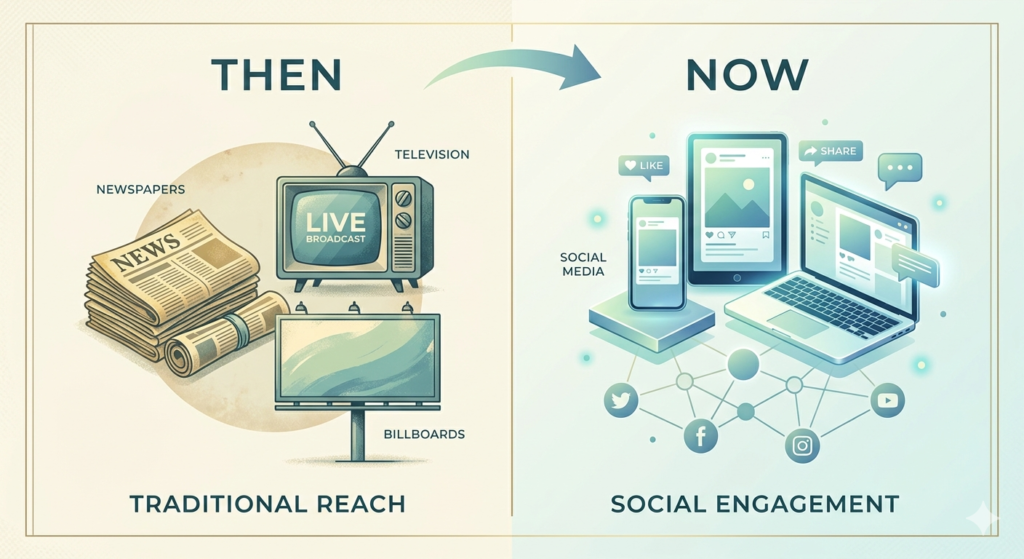
Marketing has evolved significantly over the past few decades. Traditionally, companies relied on offline channels such as television commercials, radio advertisements, newspapers, billboards, and direct mail campaigns to reach consumers. These strategies—commonly referred to as traditional marketing—use physical or broadcast media to communicate with audiences and build brand awareness (GeeksforGeeks, 2025).
Traditional marketing has historically been effective because it can reach large audiences and create tangible brand experiences through physical media. However, these methods often lack precise targeting and can be difficult to measure in terms of return on investment (GeeksforGeeks, 2025). As digital technologies and social media platforms have grown, marketing strategies have shifted toward more interactive and data-driven approaches.
Today, one of the most important strategies for modern marketers is social listening—the practice of monitoring online conversations and social media trends to better understand consumer behavior and engagement.
The Rise of Social Media as a Marketing Channel
Social media has quickly become one of the most influential technologies in modern society. Billions of people around the world use social media platforms daily to communicate, share information, and interact with brands. Because of this widespread use, social media has become a major communication channel for marketers seeking to reach consumers in real time.
Social media platforms provide digital environments where individuals and organizations can interact, exchange information, and participate in online networks. These platforms allow users to share content, discuss products, and influence one another’s purchasing decisions. As a result, social media has become a critical component of marketing strategy.
The authors further note that marketing through social media is not simply about advertising; it involves understanding how consumers communicate and share information online, particularly through online word-of-mouth interactions (Appel et al., 2019). These interactions can significantly influence purchasing behavior and brand perception.
What Is Social Listening?
Social listening is the process of monitoring conversations, mentions, and trends across social media platforms such as TikTok, Instagram, and X (formerly Twitter). Marketing teams analyze these discussions to understand consumer opinions, identify emerging trends, and evaluate how people feel about specific brands or products.
Unlike traditional market research methods, which can take weeks or months to collect and analyze data, social listening provides immediate insight into consumer behavior. This real-time feedback allows brands to adapt quickly to changes in consumer preferences and respond to cultural moments as they occur.
In the modern digital environment, consumers actively create and share content about their experiences with products and services. These conversations function as a form of online word-of-mouth marketing, which has been shown to influence sales and customer acquisition (Appel et al., 2019).
Traditional Marketing vs. Modern Digital Strategies
Although digital marketing has expanded rapidly, traditional marketing continues to play an important role in reaching certain audiences. Traditional marketing relies heavily on offline communication channels such as print media, broadcast media, and out-of-home advertising (GeeksforGeeks, 2025).
Some advantages of traditional marketing include:
- The ability to reach large and diverse audiences
- Strong brand visibility and recognition
- Greater credibility and trust due to established media channels
However, traditional marketing also has several limitations. Campaigns can be expensive, difficult to measure, and less effective at targeting specific audiences compared to digital marketing techniques (GeeksforGeeks, 2025).
For this reason, many modern marketing strategies combine traditional advertising with digital approaches such as social media marketing, influencer partnerships, and social listening.
Turning Social Media Trends into Marketing Opportunities
One of the most powerful aspects of social listening is the ability to identify viral moments and transform them into marketing campaigns.
For example, when a piece of content gains traction on social media, brands can monitor engagement levels and determine whether the trend aligns with their marketing objectives. By responding quickly, companies can incorporate these trends into their promotional strategies and reach audiences in a more authentic way.
Research suggests that social interactions and online conversations between consumers can positively affect marketing outcomes such as brand awareness, customer acquisition, and sales (Appel et al., 2019). Because of this, many companies now dedicate entire marketing teams to monitoring online discussions and analyzing consumer sentiment.
Influencers and the New Forms of Social Influence
Social media has also transformed the concept of influence in marketing. Traditionally, brands relied on celebrities and well-known public figures to promote products. Today, social media platforms have created opportunities for micro-influencers—individuals with smaller but highly engaged audiences—to influence consumer decisions.
According to the article (Appel et al. 2019), influencer marketing has become an increasingly important strategy because influencers often appear more authentic and relatable than traditional celebrity endorsements. These individuals build trust with their followers, making their recommendations more persuasive to audiences.
Influencer marketing also allows brands to communicate with consumers in a more personal way through storytelling, live streaming, and interactive content.
Why Social Listening Matters for Modern Marketing
In today’s digital environment, businesses face intense competition for consumer attention. Millions of brands and creators are producing content across social media platforms, creating a constant stream of information and advertising.
Social listening helps companies navigate this complex environment by allowing them to:
- Monitor consumer sentiment in real time
- Identify emerging trends and viral content
- Engage directly with audiences
- Improve marketing strategies based on data and feedback
Because social media influences nearly every stage of the consumer decision-making process—from product discovery to post-purchase reviews—brands that actively listen to online conversations are better positioned to understand and respond to consumer needs.
The Future of Marketing
Marketing is no longer a one-way communication process in which companies simply broadcast advertisements to consumers. Instead, it has become an interactive dialogue between brands and audiences.
Social media platforms have created digital environments where consumers share opinions, create content, and influence one another’s purchasing decisions. As a result, successful marketing strategies must focus not only on delivering messages but also on listening to consumer conversations and participating in online culture.
The brands that succeed in the future will be those that combine traditional marketing foundations with digital strategies such as social listening, influencer partnerships, and real-time engagement.
In a world where consumers are constantly connected and information spreads rapidly, the ability to listen may be the most powerful marketing tool of all.
Discover more from
Subscribe to get the latest posts sent to your email.