
We’ve all seen it: a brand goes viral, the likes are pouring in, the comments are popping off—but the bank account is still bone-dry.
The harsh truth? Virality is a vanity metric if it doesn’t do the heavy lifting for your sales. Many business owners get stuck in the “Engagement Trap.” They’re doing all the “right” things—posting reels, hopping on trends, and chasing the algorithm—yet they aren’t seeing those numbers translate into website traffic, leads, or revenue.
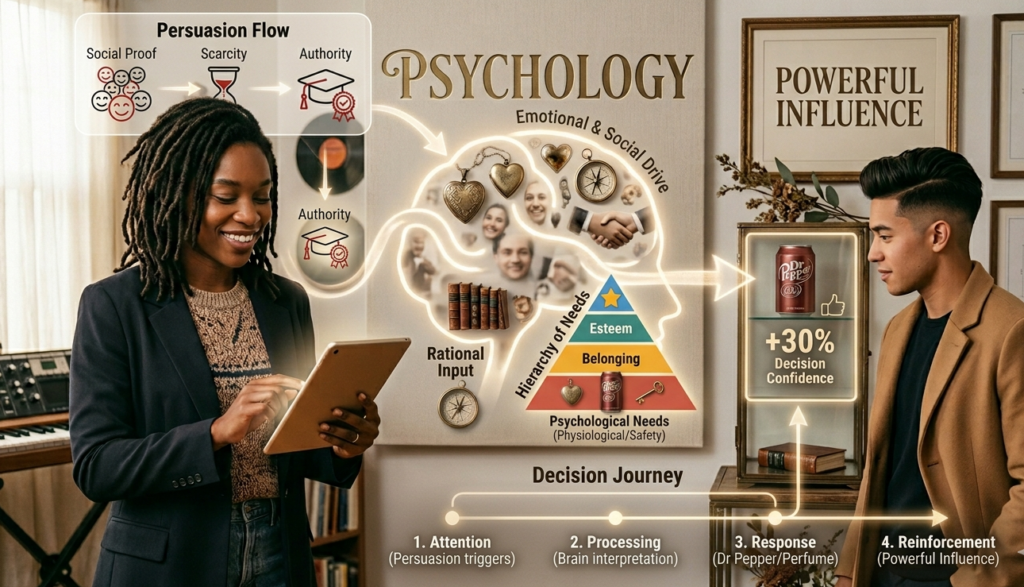
The missing link? Sales and marketing Psychology.
The Psychology of “The Idea”
To be totally frank, people don’t buy products. They buy the idea of the product. Psychology tells us that you don’t win by simply having the “best” specs or the lowest price; you win by how you make people feel.
Marketing isn’t just about showing a product; it’s about manipulating the mental image of that product in a consumer’s head. If your business is struggling, ask yourself: Is my customer emotionally attached to my brand, or am I just noise in their feed?
The Sephora Effect: Creating Ownership Before the Purchase
Think about the last time you walked into a Sephora. You might have gone to the mall for a pair of shoes, but you found yourself drawn into that black-and-white storefront. Sephora is a masterclass in experiential marketing through:
- Tactile Connection: You can touch the products, swatch them, and smell them.
- Low Barrier to Entry: You can get a makeup artist to test a foundation on your skin for free.
- The Transformation: You aren’t just looking at a bottle; you are looking in the mirror at a new version of yourself.
By the time you reach the register, you’ve already developed a sense of psychological ownership. Because you’ve worn the product and seen the results, it already feels like it belongs to you. You aren’t “buying” it; you’re just taking it home.
Selling the “Future Self
Take Fenty Beauty as an example. Imagine a customer walking in who struggles with hyperpigmentation. They aren’t looking for “pigment in a bottle”; they are looking for confidence. When they try on a foundation and look in the mirror, Fenty isn’t “selling” them. The experience is doing the work. The brand is selling the feeling of who they become when they wear the product.
The Golden Rule: You aren’t selling a commodity; you are selling the bridge between who the customer is now and who they want to be.
How SKIMS Mastered “Digital Ownership”
While Sephora uses physical stores, SKIMS has become a powerhouse by mastering this psychology in a purely digital space. They move the customer from “observer” to “owner” through three brilliant levers:
1. The “Mirror Effect” and Radical Relatability
Most celebrity brands rely solely on the founder’s face. SKIMS does the opposite. By featuring models and customers of every body type, height, and skin tone, they create a “Mirror Effect.” When you scroll and see someone who looks exactly like you—not a filtered supermodel—you stop. We are significantly more likely to engage when we see ourselves represented. You aren’t just looking at a product; you are performing a “mental try-on.”
2. Authenticity via Micro-Influencers
SKIMS leans heavily into “everyday people” and micro-influencers. This removes the “Celebrity Barrier.” When a brand only uses A-list stars, the consumer thinks, “It only looks good because she’s a Kardashian.” But when SKIMS uses a creator with a modest following who feels like your neighbor, it gains instant authenticity. It proves the product works in real life, not just under studio lights.
3. Strategic “Identity Borrowing” through Collabs
SKIMS strategically partners with brands that already have an ironclad identity—think Fendi, North Face, Nike, Swarovski, or the NBA. By aligning with these powerhouses, they borrow the trust and loyalty those brands spent decades building. It gives them an “overreach” into entirely different market segments, providing an instant “stamp of approval” to audiences who might not even follow the Kardashian family.
The Big Takeaway: Stop Posting, Start Converting
The reason most brands stay stuck in the “Engagement Trap” is that their marketing feels like a sales pitch instead of an experience. Virality is a flash in the pan; sales psychology is the fuel.
How to trigger “Ownership” in Your Own Marketing:
- The “Mirror” Rule: Use models, case studies, or testimonials that look and talk like your actual audience.
- Stop Chasing Perfection: Use User-Generated Content (UGC). Real life is relatable; perfection is distant.
- Borrow Authority: Collaborate with brands or individuals who already have the trust of your target audience.
- Lower the Risk: Give samples, offer trials, or use tools (like quizzes) that help the customer find “their” specific version of your product.
- Sell the “Future Self”: Don’t just list benefits. Show the transformation. Show the customer who they become once they own your brand.
Discover more from
Subscribe to get the latest posts sent to your email.